





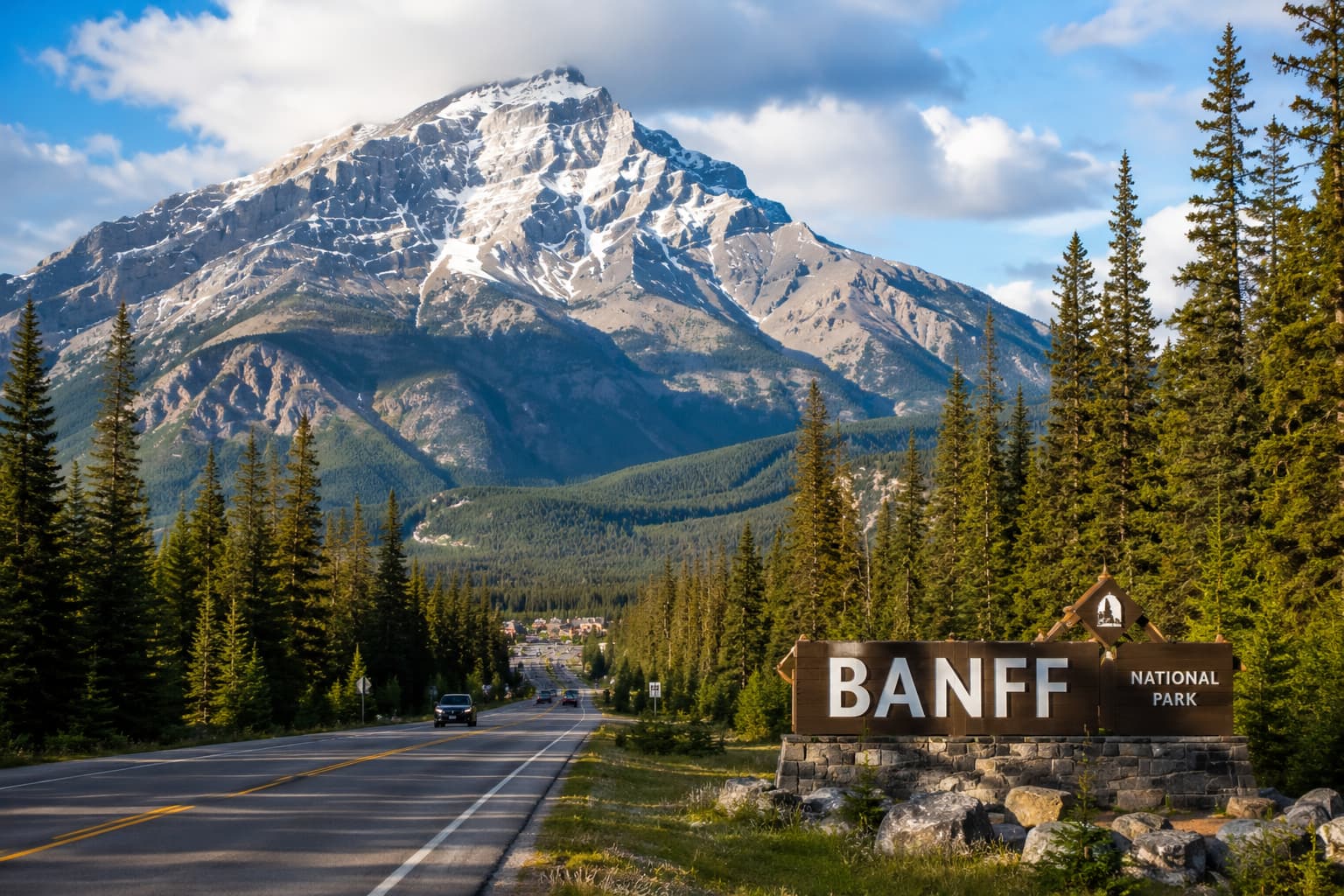
If you spend your days helping people find exactly the right words, Banff will humble you. This is scenery so overwhelming that even the most articulate visitor runs clean out of adjectives. Standing in front of a lake the colour of liquid turquoise, ringed by glaciers and jagged peaks, words like “beautiful” and “stunning” suddenly feel embarrassingly small.
Banff National Park, in the Canadian Rockies, is the ultimate test of anyone’s descriptive powers. It is a place where language reaches its honest limit, and where the only way to truly navigate this particular set of words is to give up trying and simply be there. It is living proof that some experiences have to be seen, not read about.
Canada’s oldest national park is packed with iconic sights, and how you experience it depends on your time and energy. But there is one practical catch worth knowing before anything else.
Getting to the famous spots is now the real challenge, not finding them. Access to the marquee lakes is tightly controlled, so a bit of planning, or a good tour, makes all the difference. A reputable operator handles the logistics, keeps groups sensible, and knows the park. And this is bear country, so wildlife awareness matters. Here are the best ways to experience it, ranked.
1. Compare and Book It All in One Place
Here is the thing most first-timers do not realize until it is too late: you can no longer just drive up to Banff’s most famous lakes. Private vehicles are banned from Moraine Lake entirely, and Lake Louise parking fills before sunrise, with shuttle tickets selling out online. Sorting that yourself is genuinely stressful. Banff National Park Tours is a platform built around this destination, so instead of battling the access system you get the options laid out clearly, with the transport handled.
The value is enormous precisely because the logistics are the hard part. You can secure a spot at the lakes without the pre-dawn parking scramble, weigh a day trip against a fuller itinerary, and book a reputable operator rather than risk missing the sights entirely.
You can compare Banff tours here and sort the access before you go, which matters more here than almost anywhere.
Best for anyone who wants to actually reach the famous spots without the headache. If you have the shuttles booked yourself, you are set.
2. The Icons: Lake Louise and Moraine Lake
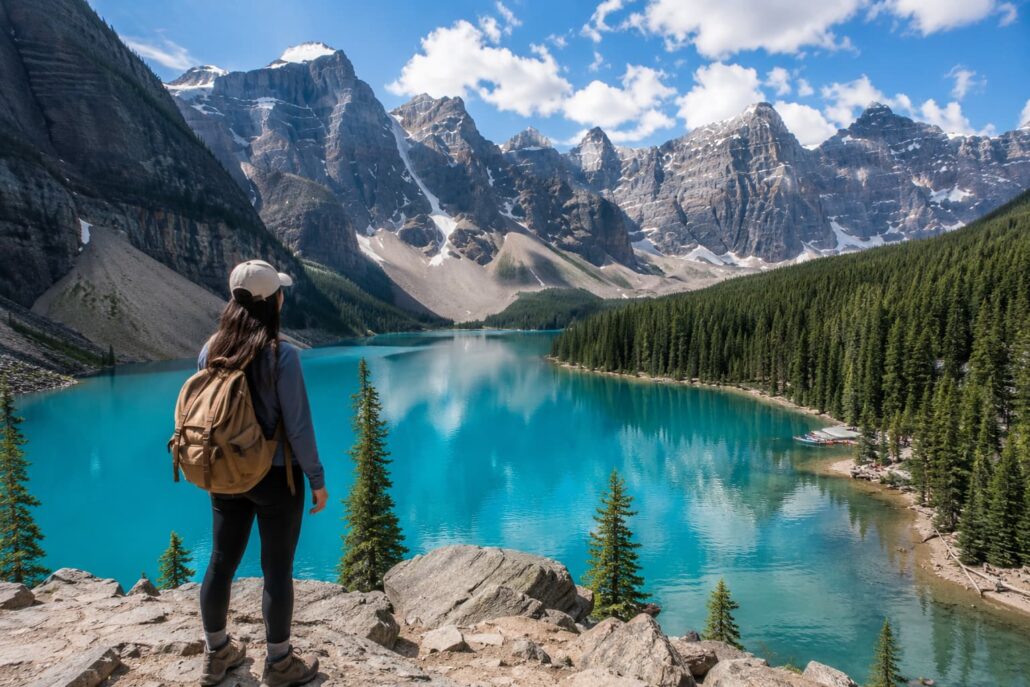
These two glacial lakes are the reason Banff sits on so many bucket lists, and they earn it. Lake Louise, with its grand chateau and glacier backdrop, is the classic. Moraine Lake, cradled in the Valley of the Ten Peaks, is arguably the most photographed view in all of Canada, an unreal shade of blue that genuinely stops people mid-sentence.
The catch, again, is access. Moraine Lake is reachable only by shuttle, bus, or tour during its open season, roughly June to mid-October, and Lake Louise parking vanishes before dawn. Once you are there, renting a canoe onto that impossible water is unforgettable.
The crowds in peak summer are real, so early or late visits, or a well-timed tour, make all the difference.
Best for every visitor. These are the unmissable heart of Banff.
3. The Great Drive: The Icefields Parkway and Columbia Icefield
For sheer scenic drama, few roads on Earth rival the Icefields Parkway, which runs north from Lake Louise toward Jasper. It strings together one showstopper after another: Bow Lake, the wolf-head-shaped Peyto Lake, and the hanging Crowfoot Glacier, each a viewpoint you will not forget.
The highlight is the Columbia Icefield, where you can board a giant Ice Explorer vehicle and drive right onto the Athabasca Glacier, then walk out over the glass-floored Glacier Skywalk suspended above a valley. It is a full day, and worth every hour.
The distances are long and there are few services along the way, so plan fuel, food, and time accordingly.
Best for travelers who want the grandest scenery and a proper Rockies road trip.
4. On Foot: Johnston Canyon and the Trails
To feel the park rather than just photograph it, get walking. Johnston Canyon, between Banff and Lake Louise, is the perfect introduction, a series of suspended catwalks bolted to the cliffs leading to the Lower and Upper Falls, accessible enough for almost anyone and spectacular year-round, including as a guided ice walk in winter.
For more of a challenge, the trails above Lake Louise, like the Lake Agnes Tea House and the Plain of Six Glaciers, reward you with tea, views, and a real sense of the high country. Wildlife sightings are common, which is a thrill and a reason for caution.
The bigger hikes need reasonable fitness and preparation, and the weather turns fast up high.
Best for active travelers who want to earn their views on foot.
5. Above It All: The Gondola, the Town and Lake Minnewanka
Not every day needs to be strenuous. The Banff Gondola carries you up Sulphur Mountain to a summit boardwalk with sweeping 360-degree views over six mountain ranges, no hiking required. Down below, the charming town of Banff, with its alpine shops and restaurants along Banff Avenue, is a lovely base, and a cruise on Lake Minnewanka or a soak in the Banff Upper Hot Springs rounds out the relaxed side of the park.
This is the accessible, comfortable version, and it works beautifully year-round, snow or shine.
There is less raw adventure here, so pure thrill-seekers will want to pair it with the lakes or the trails.
Best for families, those short on time, or anyone wanting the views without the effort.
A Few Practical Things Before You Go
Sort the lake logistics first, the moment reservations open. Moraine Lake allows no private vehicles at all, shuttle or tour only, and Lake Louise parking fills before dawn with shuttle tickets selling out fast. Booking a guided tour is the least stressful way to see both. Give yourself at least two full days, three if you can, though a day trip from Calgary covers the essentials.
A Parks Canada pass is required. Summer, June to September, has the best lake colour and full trail access but the biggest crowds, fall brings golden larches, and winter brings snow, skiing, and canyon ice walks. This is bear country, so carry bear spray, make noise on the trails, and never approach wildlife. Layer up, because mountain weather changes fast and it is cold at altitude even in summer.
Banff is also a genuine global crossroads, where travelers from every continent meet on the same trail, and English is the shared language that connects them all. For official information, Parks Canada has the passes, shuttles, and safety details, and Banff & Lake Louise Tourism helps with planning. Both pair well with any related travel guides already on the site.
Choosing the Right One for You
Banff rewards travelers who plan the access and match the trip to their energy.
Start by comparing your options through Banff National Park Tours so you actually reach the famous spots. Here for the postcard lakes, prioritize Lake Louise and Moraine Lake. Craving the grandest scenery, drive the Icefields Parkway to the Columbia Icefield. Wanting to be in the landscape, walk Johnston Canyon and the trails. Prefer comfort and easy views, take the gondola and enjoy the town.
However you do it, go and see it for yourself. You can read a thousand descriptions of that turquoise water and those glaciers, but no sentence anyone writes will ever quite hold it. Some places you simply have to stand in.
Author note: recommendations here reflect Banff’s access rules and conditions as of 2026. Shuttle systems, prices, and seasonal access change, so confirm the current details and book ahead before you go.